
Sustainable Mobility in the Workplace: Paving the Way to a Greener Future
By Elsa Baudron, published on

Contents
I. What is sustainable mobility?
Sustainable mobility, also called eco-mobility, is by definition a transport system that respects the environment, is fair and is economically viable, and that aims to reduce environmental impact while meeting people's travel needs. By integrating green modes of transport, which stand for sustainability efforts, sustainable mobility seeks to minimize greenhouse gas emissions, air pollution and energy consumption. Its importance in reducing environmental impact lies in its ability to cut our dependence on fossil fuels, preserve natural resources and improve the quality of urban life. By aligning these practices with current global sustainable development efforts, it plays a crucial role in achieving the United Nations Sustainable Development Goals (SDGs), especially those related to fighting climate change, promoting sustainable cities and communities, and ensuring healthy lives for all.
II. What are the types of sustainable mobility?
To get a clearer picture, here are the key components of sustainable mobility:
Public transport: buses, trams, trains. According to a study by the company Alphabet, 21% of respondents use public transport for their commute. However, usage varies greatly depending on where people live. In the Paris region, 49% of respondents say they take public transport to get to work, compared with only 9% in the South-West.
Non-motorized transport: cycling and walking. Many drivers are switching to bikes, favoring cleaner ways to get around. However, according to a survey by Statista in 2022, 12% of respondents used a bike for their daily trips, compared with 71% who traveled by car (or carpool). As for walking, it is the second most common daily mode of mobility after the car. For 24% of French people, walking is the main daily mode of transport (Webzine voyage).
Electric and hybrid vehicles: Hybrid vehicles, which combine two types of engines (combustion and electric), are on the rise! Indeed, in 2023, hybrid car sales were up 34% (La Tribune). Electric mobility has also seen a real upward trend over the past 10 years! In 2010, the fleet of electric vehicles on the road numbered only 102, compared with 882,531 in 2023 (Ekwateur).
Car sharing and carpooling programs: Car sharing is a short-term car rental service where users can rent vehicles for limited periods, often by the hour or by the day. Currently available in only 3% of municipalities, car sharing is a real accelerator of giving up car ownership. This concept lets users replace their personal vehicle and also supports environmentally friendly multimodal travel. Carpooling is already more widespread. More than one million trips were made by carpooling platforms in March 2023, which also helps reduce the negative impact of travel on the environment.
III. Benefits of sustainable mobility in the workplace
If sustainable mobility gets so much attention, it is because it offers many benefits. In a company, it brings both positive environmental impacts and an improvement in performance through sustainable practices.
Sustainable mobility at work: environmental benefits
Lower greenhouse gas emissions: In France, transport is the top emitter of CO2 (32% of the country's total emissions)! Promoting soft mobility in companies could cut this percentage drastically.
Less air pollution: Cycling and walking can help reduce the air pollution that causes more than half a million deaths a year (WHO). These sustainable soft mobility practices also reduce noise pollution by limiting road congestion.
Preserving natural resources: by decreasing fossil fuel consumption, sustainable mobility reduces pressure on limited energy resources. In addition, by cutting air and water pollution, green travel helps maintain a healthy environment for all, while conserving resources.
And economic benefits too, for company performance!
Significant savings: adopting modes of transport other than the car reduces costs for the employer, and some measures come with an exemption from social security contributions.
Better employee productivity: several surveys highlight the negative impact of commuting by car. Car trips are often a source of stress, especially because of road congestion, and so hurt employee productivity, particularly in the first half of the day. Encouraging soft mobility such as walking or cycling gives people a more positive approach to commuting thanks to the physical activity involved. In fact, the productivity of employees who exercise regularly increases by 6 to 9%.
Improved company performance: moving toward sustainable mobility improves your organization's image and therefore its reputation. This way, you can attract new talent, especially since young people are increasingly sensitive to environmental values. On the customer side, you can also grow your customer base by reaching new markets.
IV. Challenges and future outlook for sustainable mobility
One of the biggest challenges of sustainable mobility is the lack of adequate infrastructure, both within companies and more broadly. In companies, the lack of charging stations for electric vehicles, secure bike parking or showers for employees who cycle to work considerably slows the adoption of greener modes of transport. On a larger scale, public infrastructure such as bike lanes, public transport networks and electric charging stations is often insufficient or poorly distributed, which discourages potential users. Before even encouraging behavior change, these infrastructure barriers need to be overcome. Technological innovations and future trends help with this. The development of electric vehicles with greater range and fast-charging systems reduces dependence on traditional charging infrastructure. In addition, wireless charging technologies, still in development, promise to make energy access for these vehicles much easier. At the same time, smart mobility apps increasingly include features to optimize trips, reduce congestion and encourage the use of public and shared transport. Finally, the rise of connected infrastructure and smart cities promises better management of traffic flows and greater coordination between different modes of transport, making sustainable mobility more accessible and efficient. These advances, combined with adequate supporting policies, can significantly ease the constraints caused by today's lack of infrastructure.
V. Strategies to promote sustainable mobility in the workplace
There are many strategies to promote sustainable mobility in the workplace. They include both broad government incentives and initiatives specific to each company.
Government policies and incentives
The LOM law (Loi d'orientation des mobilités, France's Mobility Orientation Law): Adopted in 2019, this law aims to transform transport in France by making it more sustainable, accessible and inclusive, including in companies. Since the law came into force, companies must provide an employer mobility plan (PDM). The goal of the LOM law is to support companies in their transition to sustainable mobility.
Sustainable Mobility Allowance (forfait mobilité durable, FMD): The sustainable mobility allowance comes from the LOM law. It is a financial support scheme for private-sector employees and public-service staff for their commute. An employee can receive €800 per year, which can be combined with the public transport subsidy. That means they can have at least 50% of their public transport pass covered and also receive the €800.
Sustainable mobility bonus (prime mobilité durable): The sustainable mobility bonus was introduced in 2021. It is paid by the employer and is exempt from all social contributions, including the CSG and CRDS, up to €500 per year per employee. However, fuel costs can only be exempt from social contributions and tax up to €200 per year.
Company initiatives
Set up infrastructure that makes soft mobility easier
For employees to agree to use greener ways of getting around, you need to support them. To encourage physical activity such as cycling or walking, providing enough showers and changing rooms in your premises is one of the first essentials. For bikes, install monitored parking spaces. For carpooling, consider priority parking spaces to encourage participation.
Introduce financial incentives
Offering financial rewards can motivate your employees to adopt sustainable mobility. You can set up incentives specific to each mode of travel. For example, reimburse more than 50% of the public transport pass bought to get to work. Bonuses based on the carbon footprint of your employees' commutes can also be a good way to make this transition to sustainable mobility a success.
Adjust schedules and encourage remote work
Making your employees' schedules more flexible can encourage them to take public transport. By giving them more freedom over their working hours, they can avoid rush hour and enjoy a more pleasant public transport experience. Favoring remote work can also be a way to limit the negative impact of work on the environment. Try to rethink how much your employees need to travel, especially for business trips. If being there in person for a faraway meeting does not seem essential, favor video conferencing, for example.
Build a sense of community around environmental issues
To do this, use communication to showcase employees who already use soft mobility to get to work. You can take a photo of this person (riding a bike, for example) and write a profile about how they get around. Also post about this person on social media for the greatest possible impact. Seeing an employee valued by their company can make other employees want to try sustainable mobility too. Organizing theme days can also bring employees together around a shared cause. For example, offer bike repair stands or cycling routes.
Offer original activities
Try to find an activity that will leave a mark on your employees. Raising awareness while giving your team a good time can help them better remember the issues discussed. For example, you can run a Serious Escape Game. In this game, puzzles, videos and quizzes let your employees learn more about sustainable mobility in a fun, cooperative way.
VI. Conclusion
To recap: sustainable mobility brings many environmental benefits, which is why communities and companies need to issue a real call to action to individuals. With continued support, everyone can move toward adopting sustainable mobility practices. Beyond these everyday actions, innovation also has a key role to play in this transition to eco-mobility.
Read next
See all blog articles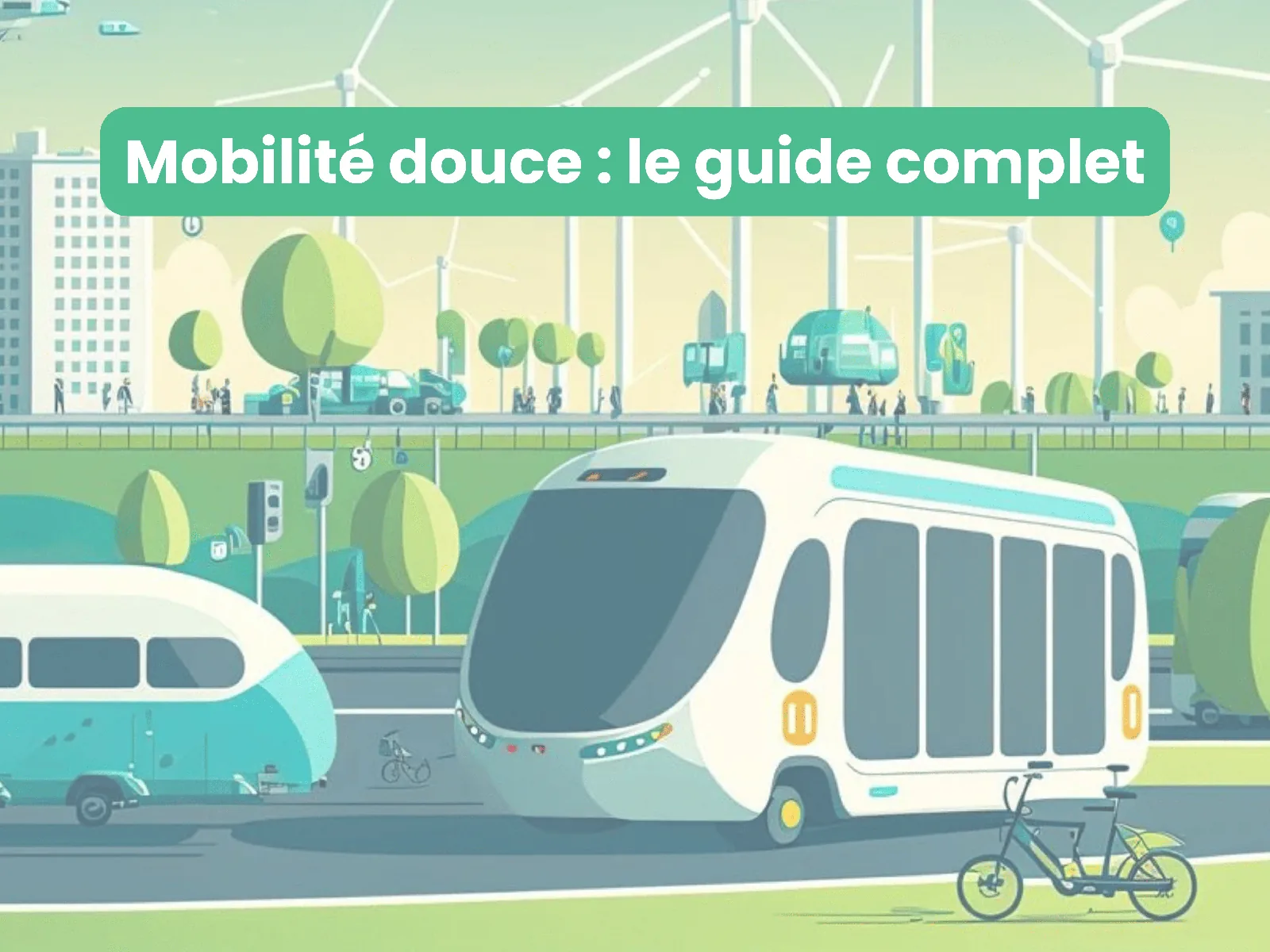


Planning a corporate escape game?
Our experts help you create a turnkey experience, tailored to your needs and your team.
 5/5 from 141+ Google reviews