
Higher Education Institutions: Why Use Our Educational Game to Raise Students' Awareness of Green IT?
By Olivia Rousseaux, published on
Contents
If you are reading this article, you probably want to find out how our educational game can help you capture your students' attention and make them aware of the issues around responsible digital technology (green IT awareness), all in a fun, friendly team moment.
Before reminding you why it matters that your students understand the issues linked to digital technology, let's review the formats available for talking to students about serious subjects, and show how our educational escape game does it in a playful way.
I. Several formats to raise your students' awareness of an important topic
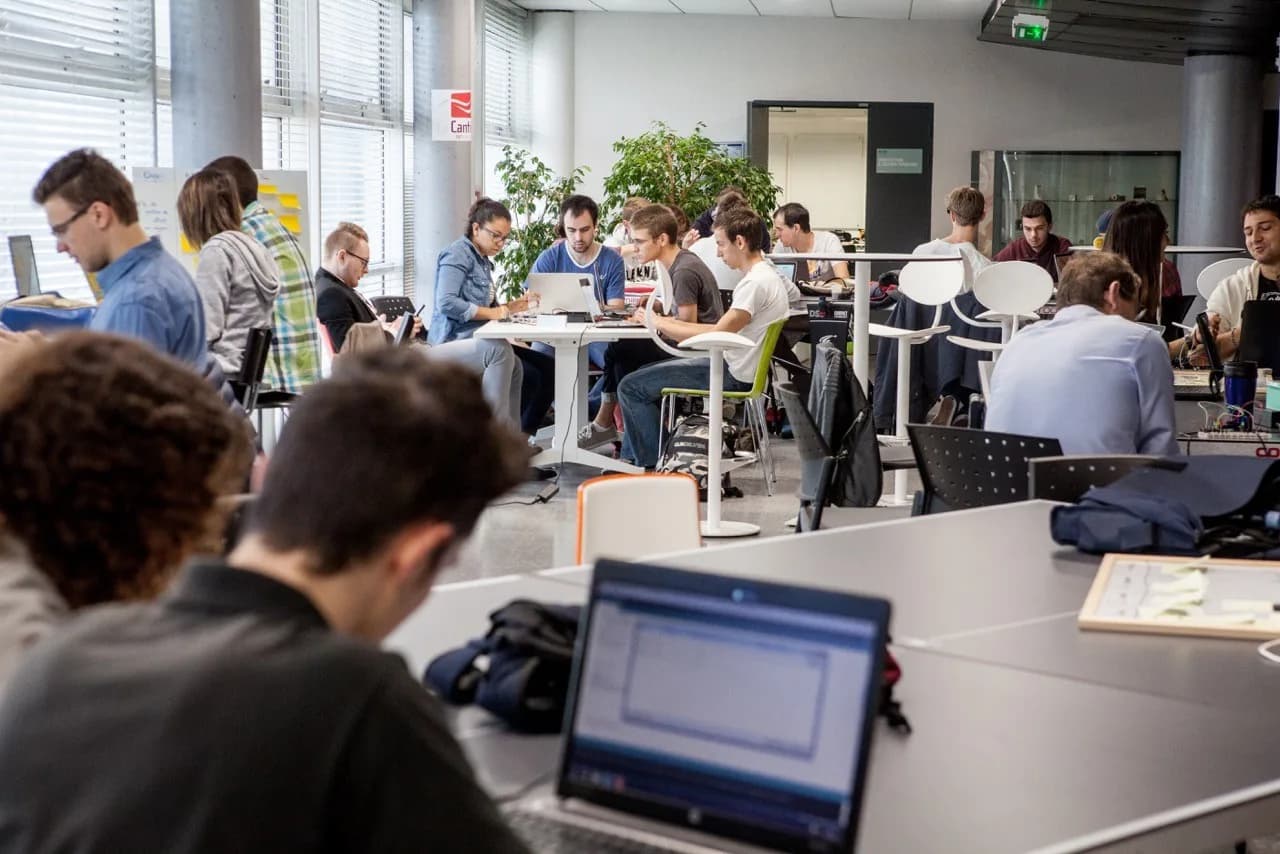
Lectures, e-learning, workshops, conferences, and so on: you already know many educational formats for raising students' awareness, whatever the subject. But each of them has its own advantages and drawbacks.
- Option 1: Lectures

Advantages: lectures are the first tool that comes to mind because the format feels safe for both the teacher and the student. This method, known to everyone, is easy to set up and makes it possible to train a large number of students in a short time.
Drawbacks: unfortunately, the student is not an actor in the class at all, but a spectator. This glaring lack of interaction is a big negative of this educational format, which can quickly become boring and create a feeling of isolation. In addition, not every learner has the same attention span or moves at the same pace, and with this method it is impossible to adapt to each person's rhythm.
- Option 2: On-campus workshops and training sessions
Advantages: face-to-face contact with a trainer allows personalized follow-up, makes it easier to reach out in case of difficulty, and engages your students more.
Drawbacks: however, it has become difficult today to get everyone together in person, on the one hand because online courses have become mainstream since the health crisis, and on the other hand because of the constant presence of international students.
- Option 3: E-learning
Advantages: with online training, the student is completely autonomous and can move through the course at their own pace.
Drawbacks: but distance learning sometimes proves ineffective, because students often find themselves alone behind their screens, with no human interaction, which can lower their involvement. To get an idea of the downsides of e-learning, a study of several companies shows that 50%¹ of their transformation programs fail because employees lack engagement during online training. And nearly 90%¹ of new skills are forgotten within the first 12 months after training.
- Option 4: Conferences and webinars
Advantages: schools can consider organizing in-person conferences and/or webinars because they are a chance to invite big names and to easily involve students.
Drawbacks: but most of the time, the registration rate is relatively low because the content of these conferences and webinars is often not accessible enough for students who are just curious about the subject. Also, this kind of event is usually optional, so only the students who are most interested, concerned and committed to the topic decide to attend.
In short, it is increasingly complicated to raise awareness on a large scale because of the spread of online courses, the growing number of remote students, and the difficulty of capturing their attention on a new but far-reaching subject. That is why we developed a new tool, the serious escape game, which helps meet these challenges.
II. The online educational escape game: why is it the ideal way to raise your students' awareness?

With the spread of remote classes, it is increasingly difficult to hold students' attention on subjects they are not very familiar with, and to raise their awareness effectively. To help you, we created an educational serious escape game. But what is it exactly?
- What is an educational escape game?
An online educational escape game integrates a learning objective and educational content (here, on responsible digital technology) into a virtual escape game. In teams of at least four, your students are immersed in a closed virtual setting that they must escape from by solving puzzles related to responsible digital technology. For example, the topics covered include:
the various digital uses,
an understanding of the architecture of digital technology, which is a physical asset (even though it is not always visible),
the impacts of digital activity,
and above all, the actions each student can take at different scales (individual and collective).
Advantages: a short, educational, collaborative online game that works at scale
In just 1.5 hours, this educational game delivers serious messages and raises the awareness of a large number of students. Another advantage: the playful, fun side of our serious escape game attracts even the students who are least interested in the subject, and makes them aware of today's digital challenges. This collaborative tool (even remotely!) aims to give your students a friendly moment while encouraging them to take action. Not sure that a game is a relevant way to learn? Read the last paragraph below.
- Awareness through gamification: a winning combination!
One last asset, and not the least: several studies show that most people who receive non-gamified training give it a very low motivation score (28%²). They also find their training boring (49%³) and unproductive (12%³). And according to our partners, our educational escape game generates a better engagement rate than the awareness tools mentioned above. The reason is that a game, as a format, reduces boredom, motivates, and holds students' attention better, while getting them to interact and think together about a shared topic.
III. So why raise students' awareness of green IT?

1. Current context: CSR, a "must-have" for schools and organizations
Note that today, including content on Corporate Social Responsibility (CSR) in the programs of higher education institutions is a demand from students themselves! They have understood the growing importance of CSR topics. They are interested, want to be trained, and get involved. For example, 80%⁴ of students chose IESEG (a French business school) for this reason. They say they took into account the CSR issues covered in the curriculum (especially those related to climate and the environment) when choosing their school. In addition, students and young graduates who are not convinced by companies' CSR efforts want to change things from the inside. According to a survey led by Ipsos for the Boston Consulting Group (BCG) and the Conférence des grandes écoles, 6⁵ out of 10 respondents (students and graduates combined) are ready to turn down a job at a company that lacks commitment.
So companies, the potential future employers of your students, are aware of the need and importance of building CSR into their values and strategy. More and more of them are looking for student profiles with a CSR background that will help them reach their goals in this area. They want future managers who can understand and deal on a daily basis with the company's current and future CSR challenges, including responsible digital technology.
2. Digital sobriety: a topic that cannot be ignored in the future!
"Digital sobriety," "green IT," "responsible digital" and "eco-design of digital services" are new terms that are starting to be part of daily life for companies (heavy users of digital equipment that is essential to their activity), for information systems engineers and for the general public.
But what exactly do they mean? Responsible digital technology is "all the information and communication technologies whose economic, ecological, social and societal footprint has been deliberately reduced and/or which help humanity reach the sustainable development goals." In short, the aim behind this new jargon is to reduce the ecological, economic and social footprint of digital technology in the service of sustainable development.
And yes, although it is intangible and invisible, digital technology has a real impact on the environment, and at a time when companies' digital transformation is in full swing and the creation of digital start-ups is booming, every action counts. According to GreenIT.fr, digital technology is responsible for about 4%⁶ of humanity's greenhouse gas emissions today. Faced with the urgent need to act to try to slow this down, more and more players (legislators and administrations, research institutes, working groups, associations, educational institutions, companies, and so on) are taking up the subject to raise awareness of the current and future issues of digital technology.
However, according to a survey carried out by the Observatoire du Numérique BVA and the Digital Society Forum, French people do not fully grasp, or still misunderstand, the links between digital technology and the environment. "The cause: a real lack of information and awareness," the authors of the survey note. Only 27%⁷ of respondents feel well informed about the impact of digital technology on the environment. That is not much, let's be honest.
It is therefore essential to trigger an awareness of digital issues in students, most of whom are future managers, from the start of their higher education. This will enable them in turn to talk about it, raise awareness, and influence the right habits in their future organizations. Note also that 51%⁷ of respondents believe the general public needs to be made aware of the impact of their digital habits on the environment.
Take the first step by raising your students' awareness of digital issues now, because in the future they will face them in their organizations, whatever they are (private or public companies, local authorities, associations, and so on).
Sources:
¹ https://www.wsj.com/articles/SB10001424052970204425904578072950518558328
² TopGamification Statistics of 2022: Next Level Gaming (review42.com)
³ https://financesonline.com/gamification-statistics/
⁵ https://www.bcg.com/press/20jan2020-talents-what-they-expect-from-their-jobs
⁶ https://www.greenit.fr/2020/10/06/4-des-emissions-de-ges/
⁷ https://www.bva-group.com/sondages/numerique-et-environnement/
So what are you waiting for to bring this educational tool on responsible digital technology into your higher education program? Let's talk!
Read next
See all blog articles Responsible digital training
Responsible digital and green IT: the complete guide
17 min read
 Responsible digital training
Digital Cleanup Day: 9 Activity Ideas to Engage Your Company
14 min read
 Responsible digital training
GreenTech Forum 2025: our partners take the stage to bring responsible digital awareness to life
8 min read

Planning a corporate escape game?
Our experts help you create a turnkey experience, tailored to your needs and your team.
 5/5 from 141+ Google reviews